.avif)
What separates high performers from the rest?
Talent, training, or something deeper in the brain?
In high-stakes environments where every second counts, elite athletes and top-level executives are turning to neuroscience to gain a competitive edge. One emerging tool is neurofeedback, which some individuals use to explore brain self-regulation and potentially enhance focus and mental clarity. While research is still developing, some people report benefits in managing stress and improving concentration through this approach. At Mindstate Psychology, we offer neurofeedback services in Perth for individuals interested in exploring this approach as part of their performance development. We work with clients to help determine if neurofeedback might be a good fit for their individual goals and circumstances.
What Is Peak Performance and Why Does It Matter?
Defining Peak Performance
Peak performance refers to a state in which your mind and body are functioning at their absolute best. It’s that moment when everything clicks; your focus sharpens, your reactions are quick, your decisions are clear, and you're fully immersed in the task at hand. For athletes, it might mean executing perfect technique under pressure. For executives, it’s making high-stakes decisions with confidence and clarity. Peak performance is not accidental. It’s the result of consistent mental and physical conditioning.
The Mental Edge in High-Performance Fields
In elite environments, small differences can separate top performers from the rest. While physical training and technical skills are essential, the brain is often the real game-changer. Mental agility, emotional regulation, and the ability to recover quickly from setbacks are critical traits. Whether you're an athlete managing pre-game nerves or an executive navigating complex business decisions, the ability to control your mental state is a competitive advantage.
Why Focus, Recovery, and Regulation Matter
True high performance is about more than being "switched on" all the time. It’s about knowing when to push, when to rest, and how to recover effectively. Focus is essential, but so is the ability to disconnect and reset. Neurofeedback plays a key role in supporting these processes. By improving brain flexibility and training self-awareness, individuals can move more easily between high-performance and recovery states, a balance that's essential for long-term success.
Who Is Peak Performance For?
Peak performance isn't just for elite athletes or Fortune 500 CEOs. It’s for anyone operating under high expectations, from creatives and academics to entrepreneurs and first responders. In a world where mental burnout is increasingly common, learning how to optimise your cognitive and emotional output is more valuable than ever.
How Neurofeedback Enhances Performance
Optimising Brainwaves for Mental Efficiency
Neurofeedback may help some individuals regulate brainwave activity to support peak mental states. By identifying imbalances, such as overactive beta waves that contribute to stress or underactive alpha waves linked to poor focus, the brain can be trained to operate more efficiently. This optimisation can improve clarity, sharpen attention, and enable quicker access to productive mental states required for high performance.
Supporting Emotional Regulation and Focus
High performers are often under constant pressure, which can trigger emotional reactivity and mental fatigue. Neurofeedback strengthens the brain’s ability to regulate itself, promoting a calm but alert state that enhances focus while reducing emotional volatility. For athletes, this might mean staying composed during high-stakes moments. For executives, it can result in clearer thinking under tight deadlines.
Accessing and Sustaining Flow States
The “flow state”, that sweet spot of total immersion and effortless productivity, is what many high performers strive for. Some researchers are exploring whether neurofeedback might influence mental states associated with optimal performance. However, the neuroscience of flow states is complex and not yet fully understood. While some people report improved focus through neurofeedback training, the relationship between specific brainwave patterns and flow states remains an active area of research.
Faster Recovery and Reduced Mental Fatigue
Peak performance isn’t just about output; it’s also about recovery. Neurofeedback assists the brain in shifting out of overstimulated or anxious states and into restful ones, such as deep relaxation or meditative calm. This ability to recover quickly between high-pressure situations is vital for preventing burnout and sustaining long-term success.
Tailored Performance Gains at Any Level
Whether you're looking to shave milliseconds off your reaction time or maintain composure during public speaking, neurofeedback adapts to your unique brain activity and goals. It’s not a one-size-fits-all approach. At Mindstate Psychology, you’ll work with Perth’s leading expert in neurofeedback, ensuring that every session is personalised to help you unlock your full potential.
Why Athletes and Executives Are Turning to Neurofeedback
Real-World Adoption by High Performers
From Olympic athletes to Fortune 500 executives, neurofeedback has gained traction among those striving for an edge. Sports professionals use it to improve focus, control nerves, and accelerate recovery, while corporate leaders rely on it to manage stress, stay mentally agile, and lead with clarity. Some athletes and business professionals have explored neurofeedback as part of their performance training, though individual experiences and outcomes vary significantly.
Meeting the Needs of Athletes
Athletes must maintain intense physical discipline, but mental discipline is equally important. Neurofeedback may help some individuals regulate performance anxiety, sharpen reaction time, and maintain focus throughout competition. Reinforcing optimal brainwave states, it allows athletes to stay composed under pressure, recover faster from mistakes, and build greater emotional resilience. This is especially valuable in sports where a fraction of a second can determine the outcome.
Supporting Executive-Level Decision-Making
Executives operate in high-pressure environments that demand constant attention, fast decision-making, and strategic clarity. Chronic stress can dull this capacity, leading to burnout or poor judgement. Neurofeedback gives executives the tools to quiet mental noise, improve emotional regulation, and boost overall cognitive function. It supports sustained high performance without sacrificing well-being, an increasingly critical balance in leadership roles.
Sustaining High Performance Long-Term
Both athletes and executives benefit from the long-term effects of neurofeedback, which builds self-awareness and trains the brain to return to balanced states naturally. Instead of relying on stimulants or stress-induced energy, users learn how to tap into calm, focused, and energised brain states. This leads to more consistent performance and fewer peaks and crashes.
Guided by Professionals Who Understand High Performance
At Mindstate Psychology, our experienced neurofeedback professionals in Perth work closely with clients to tailor programs that align with their performance goals. Whether you're training for competition or leading a team, our approach helps you build lasting mental resilience, clarity, and control.
It's worth noting that traditional performance psychology methods remain the gold standard for mental performance training. Techniques like mental rehearsal, goal setting, attentional focus training, and stress inoculation have decades of research support.
What to Expect from a Performance-Driven Neurofeedback Program
Initial Brain Assessment and Baseline Testing
Every neurofeedback program begins with a detailed assessment. This typically involves a quantitative electroencephalogram (QEEG), a non-invasive brain mapping procedure that measures your brainwave activity. The results help identify areas of overactivity or underactivity that may be affecting your performance. For high performers, this might highlight patterns linked to stress, lack of focus, or difficulty switching off. Establishing a clear baseline allows for a program that is precisely tailored to your needs.
Customised Training Aligned to Your Goals
Once the initial assessment is complete, your neurofeedback sessions are designed around your unique cognitive profile and performance objectives. Whether you want to improve sustained attention, emotional regulation, reaction time, or mental clarity, your sessions will focus on reinforcing the brainwave states that support those outcomes. This individualised approach ensures that you’re not just training your brain, you’re training it for your specific challenges and goals.
What Happens in a Session?
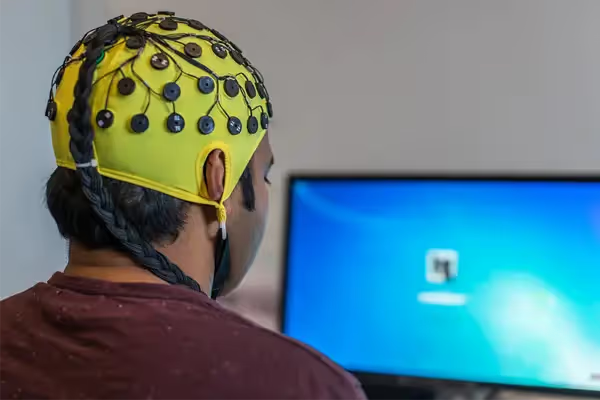
During a typical neurofeedback session, sensors are gently placed on your scalp to monitor your brain’s electrical activity. You’ll engage with a visual or auditory feedback system — such as watching a movie or playing a simple game — that rewards your brain when it produces optimal patterns. This process gradually teaches your brain how to enter high-functioning, focused states more consistently. Sessions are non-invasive, pain-free, and suitable for individuals at all levels of experience.
Tracking Progress and Measuring Gains
As your training progresses, you and your practitioner will review both subjective feedback and objective changes in brain activity. Adjustments can be made to the program as needed, ensuring that your results remain aligned with your performance goals. Individual responses to neurofeedback vary dramatically. While some people report improvements in focus or stress management after several sessions, research suggests that meaningful changes, when they occur, typically require 20-40+ sessions. It's important to note that not everyone experiences noticeable benefits.
Your Partner in Performance
At Mindstate Psychology, our Perth-based neurofeedback experts for brain health are committed to helping you unlock your full potential. With evidence-based techniques and one-on-one support, we guide you through a structured program designed to elevate your performance and maintain it over time.
Important Considerations for Performance Applications
Neurofeedback for performance enhancement is an emerging field with mixed research results. While some individuals report benefits, the evidence base is not as robust as for certain clinical applications. Performance improvements, when they occur, may be subtle and can be influenced by expectation effects, increased self-awareness, or other factors beyond the neurofeedback training itself.
Ready to Train Your Brain for Peak Performance?
Have you ever wondered what your mind is truly capable of when functioning at its best?
Neurofeedback offers an exciting and emerging way that some people may find helpful in optimising the brain to reach their full potential, whether you're aiming for gold on the field or clarity in the boardroom. At Mindstate Psychology, we work with high achievers to strengthen focus, reduce stress, and improve overall mental performance. If you're ready to invest in your brain like you do your body or business, our team is here to help. Explore our tailored programs and discover what better feels like.


.avif)







.avif)
.avif)


.avif)