If you or someone you care for has been referred for adult cognitive assessment, you may have come across the term WAIS-IV and wondered what it actually involves. Cognitive assessments can feel unfamiliar and even a little daunting, particularly when the results may influence decisions about diagnosis, employment, or support services.
This guide explains what the WAIS-IV is, what it measures, what the assessment process looks like, and how results are used to inform meaningful outcomes for adults.
What Is the WAIS-IV?
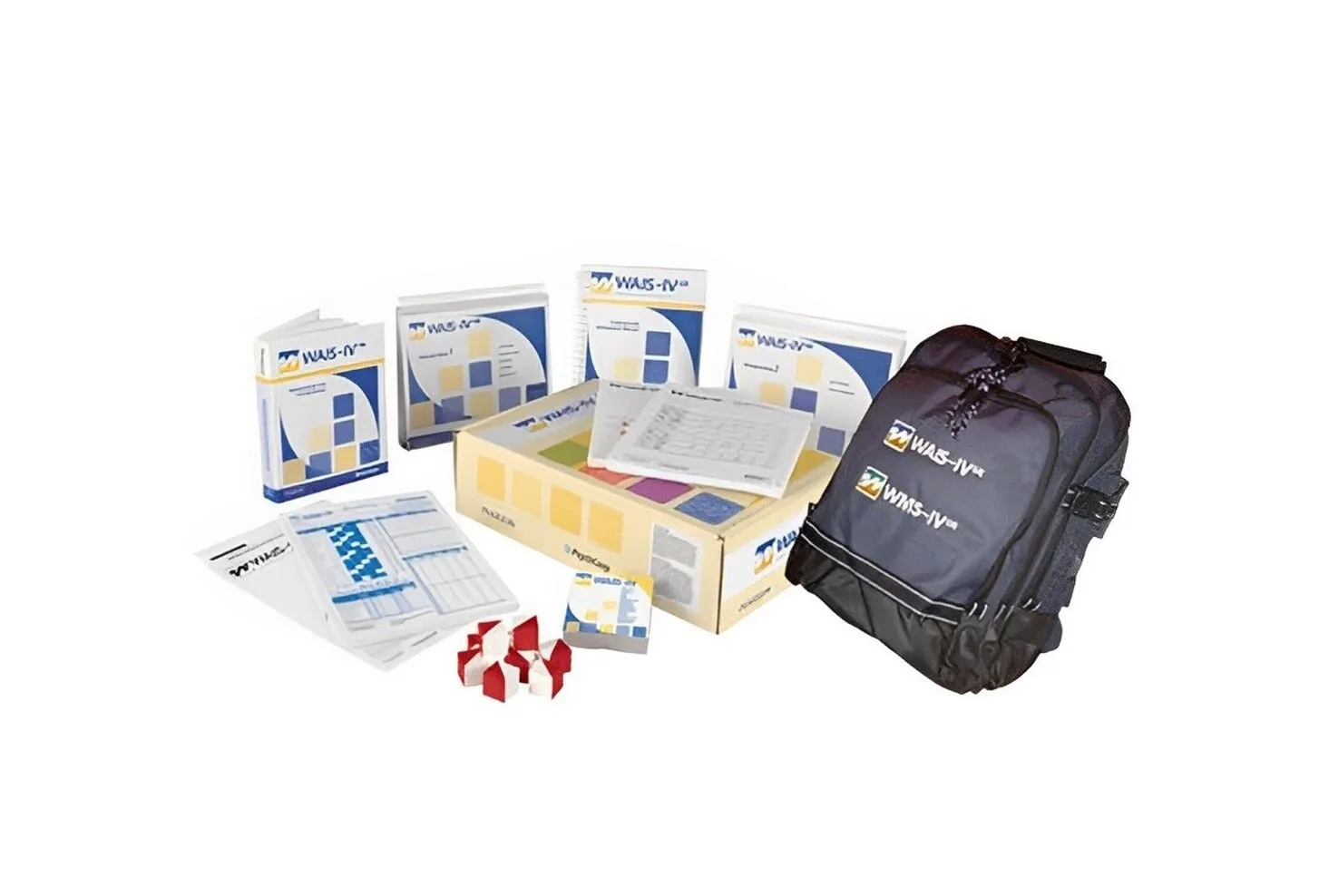
The WAIS-IV (Wechsler Adult Intelligence Scale, Fourth Edition) is an individually administered cognitive assessment designed for adults aged 16 years to 90 years and 11 months. It is the most widely used and thoroughly researched adult cognitive assessment tool in the world, with Australian norms available to ensure results are interpreted against a locally relevant comparison group.
The WAIS-IV assesses a broad range of cognitive abilities across multiple domains, providing a profile of strengths and weaknesses rather than a single number. It is routinely used in clinical, neuropsychological, forensic, and educational settings across Australia.
What Does the WAIS-IV Measure?
The WAIS-IV measures four core areas of cognitive functioning, each reported as an Index Score, along with an overall Full Scale IQ.
Verbal Comprehension Index
This measures the ability to understand and reason using language, to access and apply stored knowledge, and to express ideas verbally. It reflects vocabulary, general knowledge, and verbal reasoning ability. Strong performance in this area is often associated with well-developed reading, communication, and analytical skills developed through education and experience.
Perceptual Reasoning Index
This assesses nonverbal reasoning, visual problem-solving, and the ability to work with abstract visual and spatial information. It measures how well an individual can analyse patterns, solve novel visual problems, and think in ways that do not depend on language. This area is particularly relevant for tasks that require spatial awareness, mechanical reasoning, and visual analysis.
Working Memory Index
Working memory is the ability to temporarily hold and actively manipulate information in mind. It underpins complex cognitive tasks including mental arithmetic, following multi-step instructions, and sustained concentration. Difficulties in working memory often manifest as forgetting what was just said, losing track of a task mid-way through, or struggling to follow complex verbal information.
Processing Speed Index
This measures the speed and accuracy with which an individual can process simple visual or clerical information under timed conditions. Processing speed influences cognitive efficiency across many everyday tasks. Individuals with slower processing speed may have intact knowledge and reasoning but take longer to complete tasks, which can be misinterpreted as a broader cognitive difficulty.
These four indexes combine to produce a Full Scale IQ, which provides a summary estimate of overall cognitive functioning. However, the pattern of scores across the four indexes is often more informative than the overall score alone, particularly where there is meaningful variability across domains.
What Happens During a WAIS-IV Assessment?
The WAIS-IV is administered one-on-one by an experienced psychologist in a structured, distraction-free environment. The assessment typically takes between 60 and 90 minutes for the core battery, though additional testing may extend the session depending on the referral question and purposes for the assessments.
The tasks vary across subtests, including activities such as answering general knowledge questions, arranging visual puzzles, recalling sequences of numbers and letters, and completing visual patterns. The format is designed to be clear and structured, and most adults find the process more engaging than they expected.
Following the assessment, the psychologist scores and interprets the results and prepares a written report. A feedback session is scheduled to walk through the findings, explain what the scores mean in practical terms, and outline recommendations tailored to the individual's circumstances.
Who Is the WAIS-IV Recommended For?
The WAIS-IV is used across a wide range of clinical and applied contexts. Common reasons for referral include:
- Assessment for adult ADHD, where working memory and processing speed scores contribute important diagnostic information alongside clinical interview and behavioural data
- Neuropsychological evaluation following acquired brain injury, stroke, or neurological illness, where the profile helps document the nature and extent of cognitive change
- Diagnostic assessment for autism spectrum disorder in adults, where cognitive profiling supports differential diagnosis
- Assessment for intellectual disability in adults seeking NDIS access or support services
- Evaluation of learning difficulties in adults pursuing further education or seeking workplace adjustments
- Forensic assessments and medico-legal assessments where cognitive capacity, competency, or disability status must be objectively documented
- Baseline assessment prior to surgery or the commencement of treatments that may affect cognition
How Are WAIS-IV Results Used?
Results from the WAIS-IV inform a wide range of practical decisions and interventions. In clinical settings, they contribute to differential diagnosis and help explain presenting difficulties in terms of underlying cognitive mechanisms. In educational and vocational contexts, they support applications for reasonable adjustments, accommodations, and alternative assessment arrangements. In forensic and legal settings, they provide objective documentation of cognitive functioning relevant to questions of capacity or disability. They also guide psychologists and other treating professionals in developing targeted, evidence-informed strategies and recommendations.
What Do WAIS-IV Scores Mean?
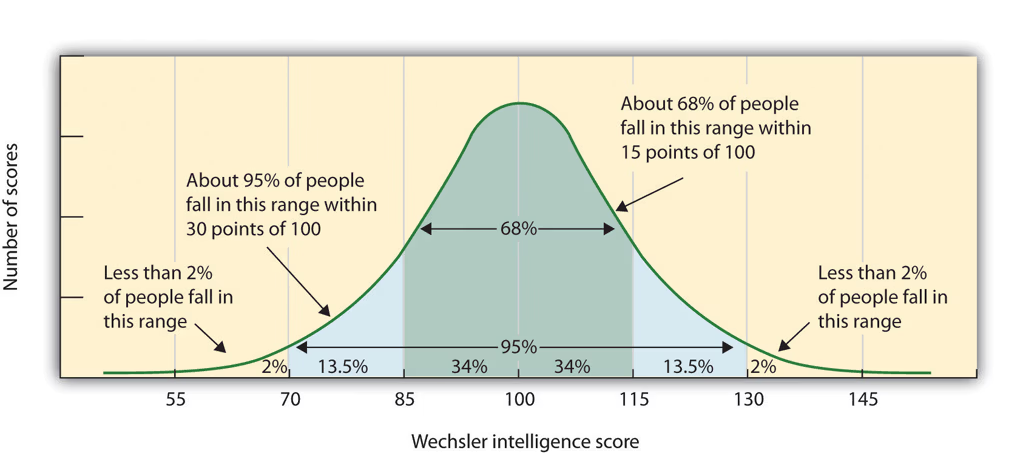
Like the WISC-V, WAIS-IV scores are standardised with a mean of 100 and a standard deviation of 15. This means that approximately 68 percent of the adult population score between 85 and 115. Scores are described using classification ranges such as Average, High Average, Superior, Borderline, or Extremely Low, which help contextualise performance relative to age-matched peers.
A score in the Average range does not preclude the existence of meaningful difficulties. For example, an individual whose working memory score falls significantly below their verbal comprehension score may experience real and frustrating cognitive challenges in daily life, even if both scores fall within the average range overall. The relationship between scores, rather than the scores in isolation, often tells the most informative story.
How Long Does It Take to Receive Results?
Following the assessment session, the psychologist will score and interpret the data, prepare a written report, and schedule a feedback appointment. This process typically takes two to four weeks. The written report documents the assessment findings in full and includes practical recommendations relevant to the individual's specific situation and goals.
Book a WAIS-IV Assessment at Mindstate Psychology
At Mindstate Psychology, our experienced psychologists conduct WAIS-IV assessments for adults across our Perth locations. Whether you have been referred for diagnostic clarification, are seeking support for a specific challenge, or need objective cognitive documentation for legal or educational purposes, we are here to help. Contact us today to find out more or to arrange a cognitive assessment appointment.













.avif)

.avif)


.avif)