Have you ever felt frustrated by your inability to focus, stay organised or manage strong emotions, even when you are genuinely trying your best?
For many adults, these challenges are not about laziness or lack of motivation. They may be linked to ADHD. Difficulties with attention, planning and emotional regulation can affect work performance, relationships and self-confidence.
The good news is that targeted psychological support can make a meaningful difference. This blog will demonstrate how an ADHD psychologist helps people strengthen focus, build practical systems and develop healthier ways to manage emotional responses.
Understanding the Role of an ADHD Psychologist
An ADHD psychologist does far more than simply confirm a diagnosis. The role involves careful assessment, structured support and ongoing strategy development tailored to each person’s needs. ADHD affects attention, executive functioning and emotional regulation, so support must address multiple areas of daily life rather than a single symptom.
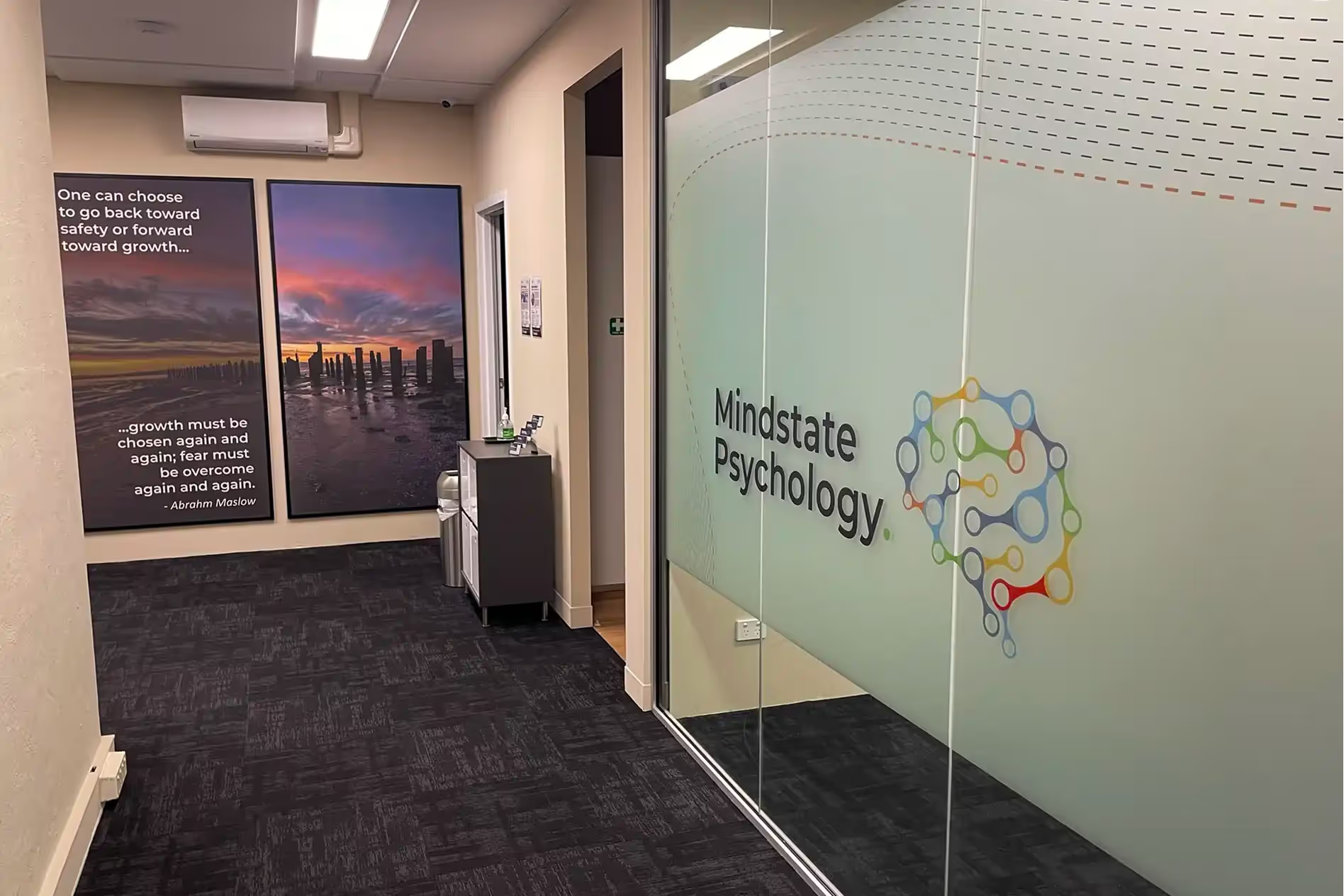
At Mindstate Psychology, we approach ADHD support with both clinical precision and practical understanding. Our psychologists draw on evidence-based frameworks to assess how attention difficulties, impulsivity and organisational challenges are affecting work, study and relationships. We aim to understand not only what is happening, but why certain patterns continue despite strong effort.
An ADHD psychologist helps people identify how their brain processes information, manages tasks and responds to emotional triggers. This insight becomes the foundation for developing sustainable strategies. Therapy may focus on improving planning skills, strengthening time awareness and reducing reactive behaviour in high-stress situations.
Importantly, ADHD support is collaborative. Rather than imposing rigid systems, we work alongside each person to create approaches that align with their lifestyle, responsibilities and goals. This personalised process encourages both accountability and flexibility.
How ADHD Support Differs From General Counselling
General counselling often focuses on emotional well-being and relationship concerns. While those areas are important, ADHD specific support requires targeted work on executive functioning and behavioural regulation. An ADHD psychologist integrates cognitive behavioural techniques with practical skill development.
This may include structured routines, task management systems and cognitive reframing techniques that challenge long standing self criticism. For many adults, years of perceived underperformance can affect confidence. ADHD informed therapy addresses both skill deficits and emotional impact.
Another key difference lies in assessment. ADHD psychologists are trained to differentiate attention-related challenges from anxiety, mood disorders or other conditions that may present similarly. This ensures that interventions are appropriate and evidence-based.
By combining clinical expertise with practical tools, ADHD psychologists provide structured guidance that extends beyond conversation. The goal is not simply to talk about challenges, but to build skills that improve focus, organisation and emotional regulation in everyday life.
Strengthening Focus Through Targeted Strategies
Difficulty sustaining attention is one of the most common reasons adults seek ADHD support. Focus challenges are not simply about distraction. They often involve fluctuating attention, hyperfocus on certain tasks and difficulty initiating less stimulating work. Addressing these patterns requires structured and personalised strategies.
Working with a professional ADHD psychologist helps translate insight into practical action. Rather than relying on willpower alone, therapy focuses on creating external systems that support attention regulation. This may involve identifying distraction triggers, adjusting work environments and developing clearer task boundaries.
Cognitive behavioural approaches are often used to address unhelpful thought patterns that interfere with focus. For example, all-or-nothing thinking can lead to avoidance when tasks feel overwhelming. Reframing these thoughts allows people to approach work in smaller, achievable steps.
Hyperfocus is another important area. While intense concentration can be productive, it may cause people to lose track of time or neglect other responsibilities. Therapy aims to harness this strength while introducing strategies that maintain balance.
Practical Tools That Support Attention
To improve focus, ADHD psychologists may introduce structured techniques such as:
- Time blocking specific periods for single tasks
- Breaking large projects into manageable actions
- Using visual reminders or digital prompts
- Creating low-distraction workspaces
- Implementing short, timed work intervals with planned breaks
These tools are not one-size-fits-all. The key is testing and refining strategies until they feel realistic and sustainable.
Therapy also explores energy management. Attention often fluctuates depending on stress, sleep and workload. Recognising patterns helps people schedule demanding tasks at times when concentration is naturally stronger.
Strengthening focus is not about eliminating every distraction. It is about building systems that reduce overwhelm and increase consistency. With structured support, people can develop practical techniques that improve productivity while protecting mental wellbeing.
Improving Organisation and Executive Functioning
Organisation difficulties are often at the core of adult ADHD. Many people describe knowing what they need to do, yet feeling stuck when it comes to starting or completing tasks. This challenge is linked to executive functioning, which refers to the brain’s ability to plan, prioritise, sequence and regulate behaviour.
Executive functioning difficulties can show up in subtle ways. Missed appointments, unfinished projects, cluttered workspaces or difficulty estimating how long tasks will take are common examples. Over time, these patterns may create stress and reduce confidence.
Understanding why adhd assessment is necessary is an important first step. A comprehensive assessment clarifies whether organisational challenges stem from ADHD or from other factors such as anxiety or burnout. Accurate identification allows therapy to target the underlying cause rather than relying on generic productivity advice.
Once ADHD related executive difficulties are identified, therapy focuses on building practical systems that align with how the brain processes information. The goal is not perfection. It is consistency and sustainability.
Building Systems That Actually Work
Organisation strategies must be realistic. Complex planners or elaborate digital tools often fail because they demand more executive capacity than they support. Instead, ADHD informed therapy emphasises simplicity and repetition.
Effective organisational strategies may include:
- Using one central calendar rather than multiple platforms
- Creating visible task lists with limited daily priorities
- Setting clear start times instead of vague goals
- Pairing routine tasks with established habits
- Reviewing weekly commitments at a consistent time
Therapy also addresses task initiation. Many adults experience what feels like mental resistance before starting important work. Breaking tasks into the smallest possible actions often reduces this barrier.
Memory supports are another key focus. External reminders, alarms and visual cues compensate for working memory limitations. Rather than viewing these supports as weaknesses, therapy reframes them as practical tools.
Improving executive functioning is a gradual process. With structured support and personalised systems, people can move from chaos to clarity. The aim is not to eliminate every challenge, but to create manageable routines that reduce stress and increase follow-through.
Supporting Emotional Regulation and Self-Esteem
While attention and organisation are often the most visible aspects of ADHD, emotional regulation can be just as impactful. Many adults describe feeling emotions intensely and reacting quickly before they have time to process what is happening. Frustration, impatience and sensitivity to perceived criticism can create tension in relationships and at work.
Emotional dysregulation does not mean someone lacks insight or maturity. It reflects differences in how the brain manages impulse control and stress responses. When strong emotions arise, the pause between feeling and reacting may be shorter. Over time, repeated misunderstandings or conflicts can affect self-confidence.
Therapy provides a structured space to explore these patterns without judgement. By understanding triggers and recognising early warning signs, people can begin to respond more intentionally rather than react automatically.
Understanding Emotional Reactivity
ADHD related emotional responses are often rapid and intense. Common experiences include:
- Feeling overwhelmed by minor setbacks
- Becoming easily irritated during busy periods
- Struggling to let go of criticism
- Experiencing guilt or shame after impulsive reactions
Identifying patterns is the first step. Therapy helps people map out situations that trigger strong responses and examine the thoughts that follow. This increases awareness and reduces confusion.
Developing Regulation Strategies
Cognitive behavioural techniques are frequently used to strengthen emotional regulation. These may include:
- Practising brief pause techniques before responding
- Challenging negative self-talk
- Reframing perceived rejection
- Building distress tolerance skills
Learning to slow down emotional responses allows space for choice. Even a few seconds of reflection can change the outcome of a conversation or decision.
Self-compassion is also an important component. Many adults with ADHD carry years of self-criticism related to perceived underachievement. Therapy addresses this by separating identity from symptoms. Rather than viewing challenges as personal flaws, people learn to understand them as patterns that can be managed with skill development.
Improved emotional regulation often leads to stronger relationships and greater confidence. When reactions become more measured and predictable, communication improves and tension decreases.
Supporting emotional well-being is not about suppressing feelings. It is about developing tools that create balance. With structured psychological support, people can strengthen resilience, rebuild confidence and approach daily challenges with greater clarity and stability.
When It Is Time to Seek Professional Support
Many adults learn to compensate for attention and organisation challenges for years before considering professional help. High effort can sometimes mask the underlying difficulty, but this often comes at the cost of exhaustion and frustration. If focus, planning or emotional regulation consistently interfere with work, relationships or daily functioning, it may be time to explore structured support.
Ongoing stress linked to missed deadlines, incomplete projects or strained communication can affect confidence. Some people begin to question their abilities, assuming the issue is motivation or discipline. In reality, these patterns may reflect neurodevelopmental differences rather than a lack of effort.
Choosing to seek help for adhd symptoms is a proactive step, not a sign of failure. A professional evaluation can clarify whether ADHD is contributing to the challenges you are experiencing and guide appropriate next steps.
Indicators That Support May Be Beneficial
You may consider seeking professional guidance if you notice:
- Persistent difficulty sustaining attention despite genuine effort
- Repeated organisational challenges that create stress
- Emotional responses that feel disproportionate or hard to manage
- Ongoing tension in relationships related to forgetfulness or impulsivity
- A sense that you are underperforming compared to your potential
Support can also be helpful if you were diagnosed in childhood but have not received adult-focused strategies. Responsibilities increase over time, and coping methods that once worked may no longer feel sufficient.
Professional support offers clarity. Rather than guessing or self-diagnosing, structured assessment provides insight into your cognitive and emotional patterns. From there, therapy can focus on practical strategies tailored to your lifestyle and goals.
Seeking help does not require certainty about having ADHD. It requires recognising that your experiences deserve attention and evidence-based guidance. Early intervention can reduce long-term stress and improve overall well-being.
Ready to Build Stronger Focus and Emotional Balance?
Have you been managing attention and emotional challenges on your own for longer than you would like?
Support from an ADHD psychologist can provide clarity, structure and practical tools that make everyday life more manageable. Strengthening focus, improving organisation and learning to regulate emotions are skills that can be developed with the right guidance. You do not need to navigate these patterns alone.
If you are ready to take a constructive next step, you can book for your adhd therapy today and begin working toward greater confidence, balance and sustainable progress.



















.avif)
.avif)


.avif)